
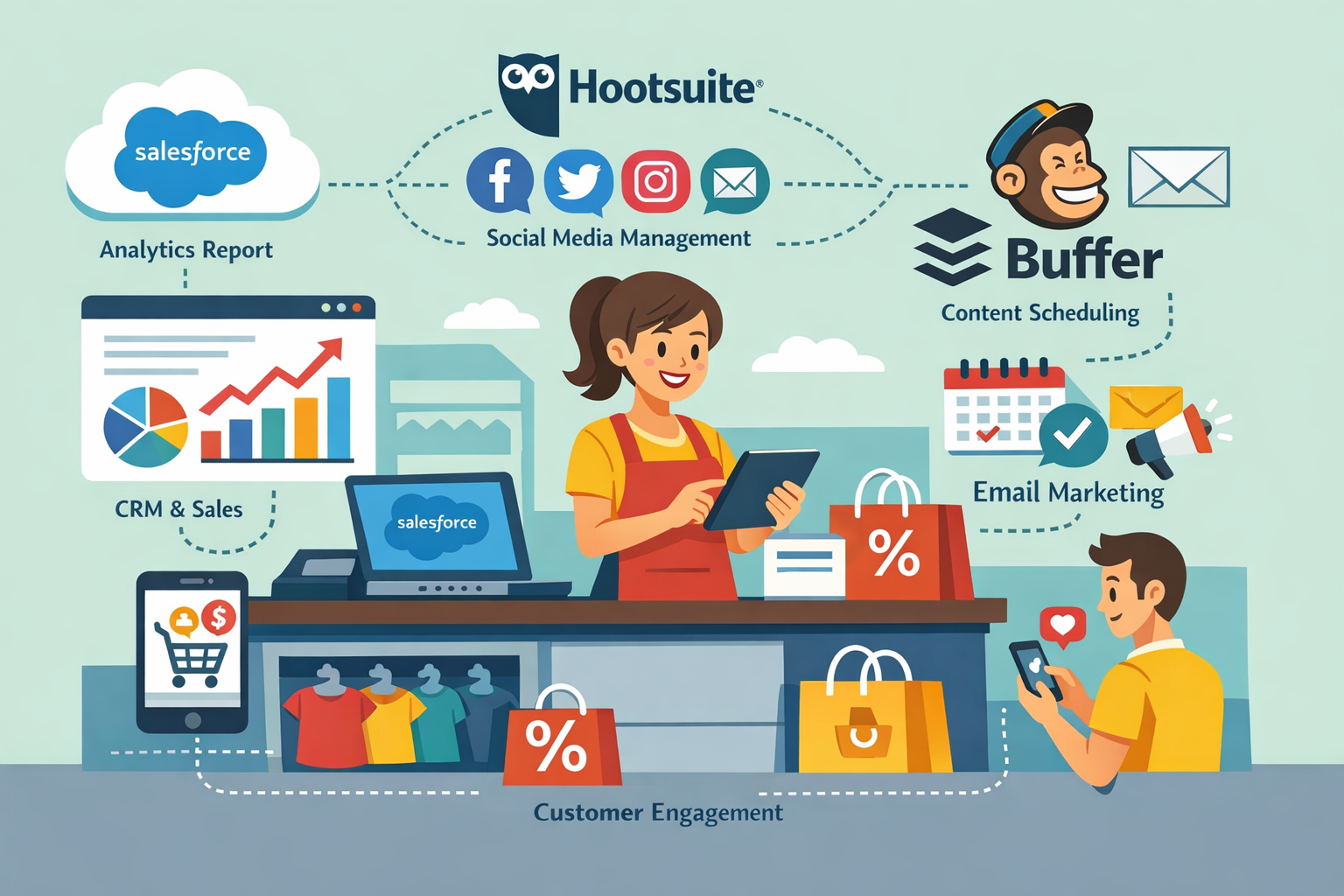
There's no software more relevant to retail stores today than marketing platforms, which make them stay competitive and connected with customers. They make everyday marketing tasks like managing promotions or understanding buying behavior seem easy and effective. Automated marketing platforms take out the guesswork, by using data to create targeted campaigns that actually resonate with shoppers. They also save time by automating repetitive tasks, allowing store owners and teams to focus more on strategy and customer experience. On this page, we discuss top 4 marketing tools that can improve marketing at a retail store.
1. Customer Relationship Management (CRM) Tools
Leading retail stores use Customer Relationship Management (CRM) tools to build stronger and more meaningful relationships with their customers. This tool organizes, analyzes customer data, and much more all at just one place. Instead of piecing together scattered information, retailers can track purchase history, preferences, and interactions to better understand buying behavior. Here are some ways it can
Personalize Customer Engagement
CRM tools allow retailers to deliver personalized experiences by using customer data through past purchases, browsing behavior, and preferences. Instead of sending general promotions, stores can target specific customer segments or even individuals with offers more to their liking.
For example, a clothing retailer can recommend products based on previous purchases or seasonal trends relevant to the customer's buying or browsing history. This level of personalization from CRM tools like Zoho makes customers feel valued and understood, increasing the likelihood of repeat purchases. Over time, personalized engagement will grow your brand and strengthen emotional connections, leading to higher customer satisfaction and stronger loyalty.
Improve Customer Retention
Retaining existing customers is far more cost-effective than acquiring new ones, and a CRM tool can do this for you. It keeps a track of customer activity and purchase patterns. With this, retailers can identify when a customer is active so they can target them with exclusive offers or reminders.
Loyalty programs used with CRM systems like HubSpot further encourage repeat visits through rewards for frequent shoppers. Additionally, CRM tools help businesses maintain consistent communication through email, SMS, or app notifications. This ensures businesses keep their brands connected to customers and builds long-term relationships.
Streamlined Marketing and Sales Processes
CRM tools automate and simplify many marketing and sales tasks to save time and reduce manual effort. Retailers can set up automated workflows such as welcome emails for new customers, birthday discounts, or follow-up messages after a purchase. This ensures timely and consistent communication without requiring constant manual input. Additionally, CRM systems help align marketing and sales teams by providing a shared view of customer interactions and campaign performance. This coordination leads to more effective campaigns, faster response times, and a smoother overall customer journey from discovery to purchase.
2. Email Marketing Platforms
Email marketing platforms assist in engaging customers, promoting products, and driving repeat sales. Businesses can use Mailchimp and Constant Contact to improve customer retention, boost conversions, and provide insights into buying behavior. It helps them make smarter marketing decisions and increase overall revenue efficiently.
Talk to the Right Customers
Email platforms let retail stores group customers based on what they like or buy. So instead of sending random emails, you can share relevant offers and product suggestions. This makes customers feel understood and increases chances of repeat purchases.
Set It and Forget It
You can automate emails like welcome messages, cart reminders, or festive offers. This saves time and keeps communication consistent. Even when you’re busy running the store, emails keep working in the background to bring customers back.
Know What’s Working
These platforms show how many people opened, clicked, or bought from your emails. Retailers can easily see what’s working and what’s not. This helps improve future campaigns and make smarter marketing decisions. Use customized Bitsy short URLs to make your links more secure and appealing to customers. This service is free and you can also signup for free and track every click at no extra cost.
Reach Everyone Instantly
Got a sale or new arrivals? Send one email and inform all your customers instantly. It’s a quick and cost-effective way to boost store traffic, increase sales, and keep your audience updated without much effort.
3. Social Media Management Tools
Retail stores use social media management tools like Hootsuite and Buffer to take care of all their posts, messages, and comments in one place. They make it easy to schedule content, stay active, and track performance, so stores can connect with customers better.
Plan Posts in Advance
Social media tools let you schedule posts ahead of time, so you don’t have to post daily manually. Retail stores can plan content for sales, new arrivals, or festivals and stay consistent without last-minute stress.
Manage Everything in One Place
Instead of switching between apps, you can handle all your social media URLs and accounts from one dashboard. Reply to comments, messages, and mentions easily, saving time and making sure no customer interaction gets missed.
See What’s Working
These tools show likes, shares, reach, and engagement. Retailers can quickly understand which posts perform best and adjust their strategy. It helps in creating better content that actually connects with customers and drives more attention.
Stay Active Without Effort
Being active online is important, but not always easy. These tools help maintain a regular posting schedule, so your store stays visible. This keeps customers engaged, builds trust, and makes your brand look more professional and reliable.
4. Marketing Automation Platforms
This type of software helps retail businesses streamline repetitive marketing tasks like email campaigns, customer segmentation, and promotions. Platforms like Salesforce save time, improve ad targeting, and create personalized shopping experiences for customers. They make it easier for retailers to attract, engage, and retain customers by providing the following services.
Personalized Communication at Scale
Retailers can use automated marketing software to automatically send personalized emails with short affiliate links, SMS, or notifications based on customer actions. They can be programed to send out a birthday discount to specific customers or even a reminder about an abandoned cart, without requiring manual effort.
For example, an MAP like CleverTap uses an AI engine (CleverAI) to predict user behavior and automatically deliver the appropriate message to customers at the right time.
Efficient Campaign Management
Marketing automation tools allow stores to plan, schedule, and execute campaigns from one point. This reduces manual work, minimizes errors, and ensures consistent messaging across channels.
Better Insights and Decision Making
Automated marketing platforms provide detailed analytics on campaign performance, customer behavior, and sales trends. Retailers can make smarter decisions and aim for a better return on investment by focusing on what's working and adjust strategies.