
Businesses constantly look for simpler ways to connect customers with websites, offers, products, and useful information. Two popular options are short URLs and QR codes, each serving different marketing situations. Understanding the short URL vs QR code difference helps businesses settle on the right format. With the tools from Bitsy, you can create, manage, and track both options without adding unnecessary complexity. This guide explains where each works best and when combining them makes sense.
Short URLs vs QR Codes: What are they?
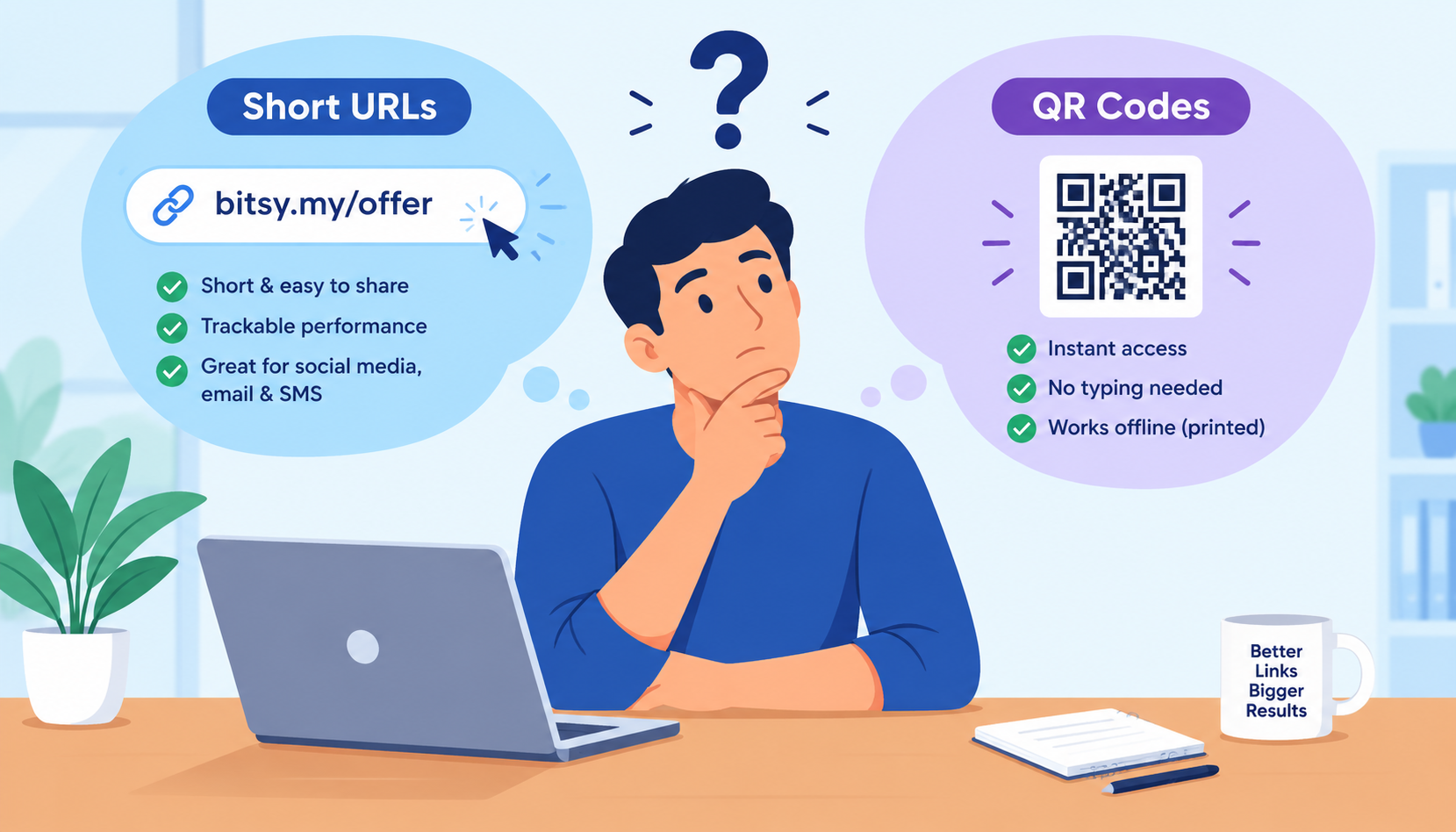
Short URLs are compact web addresses that replace long, complicated links with something cleaner and easier to remember. They work particularly well across websites, social media, emails, digital advertisements, presentations, and messaging platforms. A short URL can also be typed out manually when customers cannot click or scan.
QR codes are constructed patterns that connect scannable images directly with digital destinations using a smartphone camera. They work especially well on packaging, posters, flyers, menus, signage, business cards, and printed advertisements. The QR code vs short URL decision usually depends on where customers encounter your marketing and how they naturally interact with it.
Ease of Use QR Codes or Short URLs
Short URLs are easy to type, remember, copy, paste, and share across different digital platforms. They remain useful when customers receive links through messages, emails, social posts, or conversations. For businesses, the simplicity of short URLs can make sharing feel natural and less disruptive. QR codes provide a faster option when customers already have their smartphones nearby. Instead of typing, users simply open their camera, scan the code, and follow the displayed destination.
Where Customers See Short URLs & QR codes for business
Customers can encounter short URLs across websites, social media profiles, emails, digital advertisements, presentations, and online campaigns. They are especially convenient where links can be clicked, copied, or typed quickly. QR codes become highly visible across physical marketing materials and offline campaigns. Businesses can place them on packaging, print advertisements, signage, flyers, menus, displays, receipts, and promotional merchandise. Using both formats allows customers to choose whichever interaction feels more convenient for their situation.
How Customers Interact with QR codes & Short URLs
Think about whether customers already have their phones available when they encounter your marketing message. If they are browsing digitally, clicking a link usually requires less effort than opening a camera. Physical campaigns create a different situation because scanning can be considerably easier than typing.
For example, Bitsy.my supports short links for businesses across digital campaigns while QR codes connect offline audiences. The key consideration remains simple: choose the interaction that matches the customer’s immediate environment.
Go the Extra Mile with Branded Short Links & QRs
Branded short URLs can replace unfamiliar strings with recognizable words that reinforce your business identity. Customized QR codes can similarly incorporate brand colors, logos, and visual elements while remaining functional for scanning. These details make marketing materials feel more professional and familiar for customers. A URL shortener helps businesses create consistent links while supporting campaign management and tracking. For many brands, this combination becomes the best way to share links for business across digital and physical touch-points.
Why Tracking & Analytics Matters
Tracking helps businesses understand whether their links and QR codes are actually generating meaningful customer engagement. Depending on the setup, analytics can reveal clicks, scans, traffic sources, campaign performance, and conversions over time. These insights make it easier to compare different campaigns and understand which channels attract attention. Bitsy Short URLs for business also provide useful data when links appear across multiple digital platforms. With measurable results available, businesses can then adjust messaging, placements, and campaigns based on actual customer interactions rather than assumptions.
Enjoy Flexibility Across Digital and Offline Marketing Channels
Short URLs travel easily between websites, emails, social media, advertisements, presentations, messaging apps, and other digital channels. They are especially useful when customers can click or copy links directly from their screens. QR codes offer another layer of flexibility by connecting physical marketing with digital experiences through smartphone scanning.
This makes QR codes particularly powerful for packaging, retail displays, events, signage, brochures, and printed advertisements. Understanding these short URL benefits helps businesses build campaigns that work across different environments. Using both formats can create smoother connections between online and offline customer journeys.
Accessibility with Short URLs and QRs Are Easier for All
Not every customer can comfortably scan a QR code, and some may prefer straightforward text-based links. Camera access, device settings, lighting, distance, and personal preferences may affect the scanning experience. Short URLs provide an alternative that customers can type, copy, click, or share without relying on scanning.
Including both options makes QR code marketing more accessible across different customer situations. This approach also helps businesses avoid depending entirely on one interaction method, especially when campaigns reach diverse audiences.
Build Security & Trust with Short URLs & QR Codes
Both short URLs and QR codes should direct customers toward recognizable, secure, and trustworthy destinations. Short links can sometimes hide the final destination, making a recognizable branded domain particularly valuable for establishing confidence. With branded links through Bitsy, businesses can use secure short URLs and ensure their destination pages use HTTPS and provide relevant information.
QR codes require similar care because customers cannot visually inspect the destination before scanning. Businesses should use clear branding, trusted domains, and secure landing pages when creating Bitsy QR codes. Avoid unfamiliar-looking links, unexpected redirects, or QR codes placed over suspicious promotional materials.
Cost & Maintenance of Bitsy Short URLs or QR Codes
At Bitsy.my, businesses can create short URLs and QR codes for free. This includes customization, tracking, and ongoing campaign management. Both formats support different marketing needs without requiring complicated production processes. The QR code benefits for business become especially practical when physical materials need measurable digital connections.
Create a Bitsy Short URL for Your Users
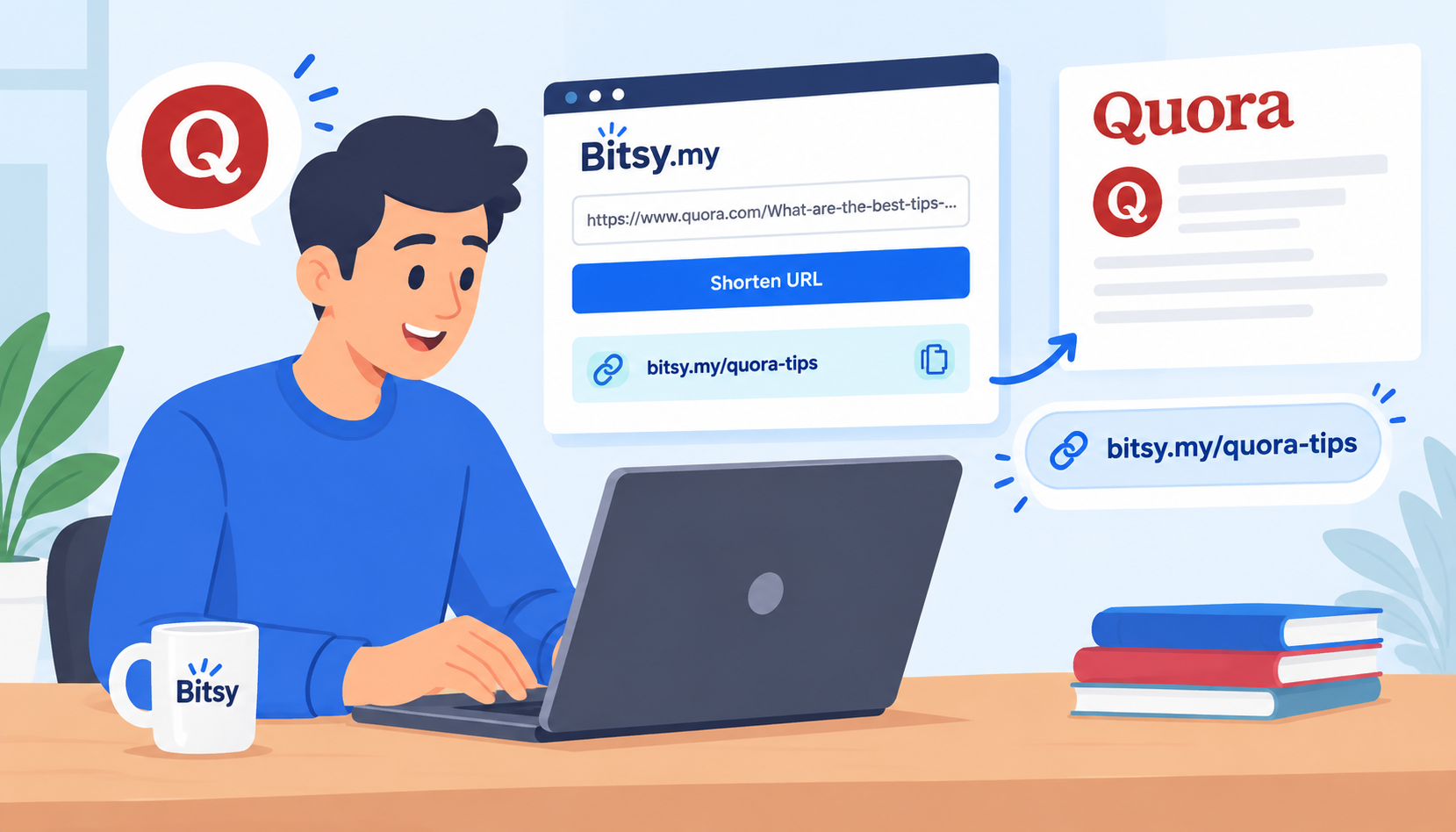
Open Bitsy.my
Paste the long URL.
Hit the 'Shorten' button to create the short link.
Copy the link and share it across campaigns.
How to Instantly Create a Bitsy QR Code
Visit the Bitsy.my QR code creator.
Enter your destination URL.
Design customized QR code with available settings.
Hit the 'Generate' button to create the free scannable code.
Download it and place it where ever you want.
So What's Better - QR Codes or Short URL?
The choice depends mainly on where customers encounter your campaign and how they interact with it. Choose a short clickable URL when promoting through websites, social media, emails, messages, or digital advertisements. You can choose a QR code when customers encounter packaging, signage, flyers, menus, events, or other physical materials.
Using both makes sense when campaigns span digital and offline environments, giving customers multiple ways to connect. Ultimately, Short URLs vs. QR Codes becomes straightforward: if it's digital-first, then create a Bitsy short URL; if it's print/offline then go ahead and use a Bitsy QR code. For maximum flexibility use both!